Specifying Crimsafe security screens and doors for a contemporary residence requires balancing three non-negotiable criteria: structural performance against forced entry, sightline preservation, and integration with the architectural language of the home. The system’s tensioned 304-grade stainless steel mesh, secured through a patented Screw-Clamp™ technology, delivers impact resistance that meets Australian Standard AS 5039 while maintaining the visual transparency essential to modern design. For architects and discerning homeowners working on projects in 2026, the selection process centers on mesh aperture density, frame profile dimensions, and powder-coat finishes that complement rather than compete with fenestration detailing.
The sophistication of high-end residential security has evolved considerably beyond the utilitarian barriers that once dominated the category. Today’s specification demands acknowledge that protective infrastructure must recede into the design composition, supporting better security comfort without announcing its presence through heavy framing or visible obstruction. Crimsafe addresses this imperative through engineering that prioritizes slimline profiles and mesh weave patterns calibrated for uninterrupted views, a particularly crucial consideration in homes defined by expansive glazing, indoor-outdoor fluidity, or景观 framing.
Understanding product distinctions within the Crimsafe portfolio extends beyond catalog specifications. Frame depth, hinge configuration, and mesh tension affect not only performance thresholds but also reveal rates, shadow lines, and compatibility with automated systems. The buying decisions explored in this guide reflect real-world applications across coastal modernist estates, urban heritage conversions, and climate-responsive pavilions, informed by consultation with specialists like GPW Security who navigate the intersection of protective standards and design intent daily.
Understanding Crimsafe Technology: What Sets It Apart
Crimsafe operates on a fundamentally different engineering principle than conventional security screens. Where traditional mesh products rely on the material strength of the barrier alone, Crimsafe employs a screw-clamp system that transforms the entire installation into a structural unit. The stainless steel mesh is mechanically fixed to the frame at intervals of approximately 75mm using tamper-resistant screws, creating a tension that distributes impact force across the entire surface rather than concentrating stress at a single point. This patented clamping method prevents the mesh from being pulled from the frame during forced entry attempts, addressing the primary failure mode of standard security screens.
The mesh itself represents years of metallurgical refinement. Crimsafe uses 0.9mm diameter 304-grade stainless steel woven in a specific pattern that achieves remarkable tensile strength, approximately 900 pounds force per linear inch in testing conditions. This specification matters for modern homes where large openings demand unobstructed views. The tight weave maintains structural integrity across expansive door and window spans without requiring intermediate support bars that would fragment sightlines. The stainless steel composition resists corrosion in coastal environments and maintains its structural properties across temperature extremes, critical for projects in varied climates from tropical Queensland to Mediterranean settings.
Security certification substantiates these technical claims. Crimsafe products meet Australian Standard AS5039 for security screen doors and windows, which mandates resistance to knife shear, jemmy attacks, and impact testing. Products also achieve compliance with AS5041 for hinged security doors and AS5040 for sliding applications. These certifications require independent laboratory testing that simulates real-world attack scenarios, providing objective validation rather than manufacturer claims alone.
For architects and homeowners prioritizing open-plan living, the airflow and visibility metrics prove equally significant. The mesh achieves approximately 52% optical clarity, substantially higher than many security alternatives, while maintaining 60% airflow capacity. This performance enables Crimsafe to function within passive cooling strategies and preserve the visual connection between interior and exterior spaces that defines contemporary residential design. The black finish recedes visually against most backgrounds, effectively disappearing from casual observation while maintaining its protective function.
Key Buying Factors: What to Consider Before Investing
Architectural Integration and Aesthetic Alignment
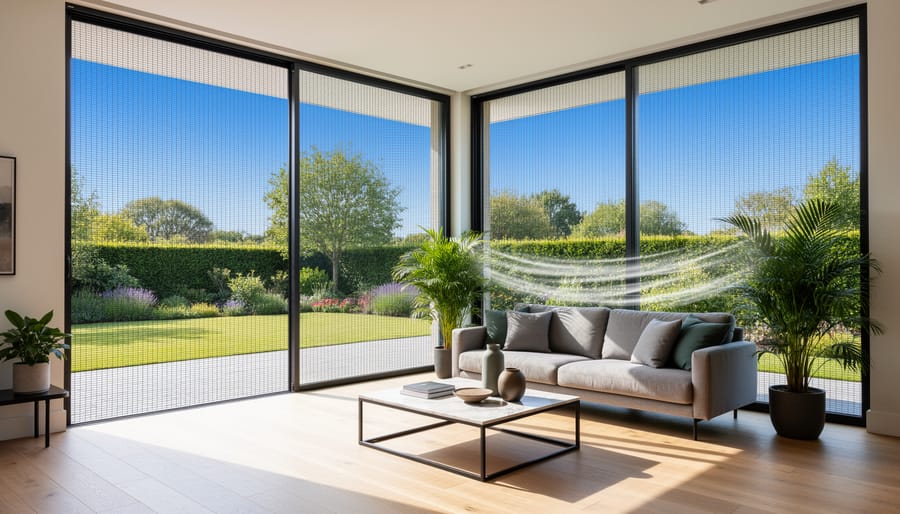
The most common failure point in specifying Crimsafe for high-end residential projects isn’t technical, it’s aesthetic. Too often, an otherwise impeccable contemporary design gets compromised by security screens that announce themselves rather than recede into the architecture.
Contemporary and minimalist homes demand slim sightlines and uninterrupted transparency. Crimsafe addresses this through Ultra-Vue profiles that reduce frame visibility by up to 30% compared to standard options. The mesh itself, woven from 0.9mm stainless steel wire, creates a barely-there scrim effect when viewed from inside, particularly in black powder-coat finishes that optically disappear against shadowed interiors.
Color selection extends far beyond basic white and black in 2026. Crimsafe now offers over 200 powder-coat colors, including custom color matching to architectural specifications. For coastal contemporary estates, matte charcoal and deep bronze tones complement weathered timber cladding and natural stone. Minimalist villas benefit from true white or pearl finishes that align with crisp render systems.
Frame profile depth matters profoundly. Specify the narrowest compatible profile for your opening size, oversized frames create visual weight that contradicts the lightness modern design pursues. For floor-to-ceiling applications in open-plan living areas, frameless bottom rails eliminate the horizontal break that disrupts sightlines to landscape beyond.
The goal isn’t invisible security, an impossibility, but rather an installation that reads as intentional architecture rather than retrofitted protection. Treated as a design decision from initial concept rather than a late-stage addition, Crimsafe becomes another material in your architectural palette.
Security Requirements and Certification Standards
Crimsafe systems carry Australia’s AS 5039 and AS 5041 certifications, rigorous independent standards for forced-entry resistance that measure impact tolerance, jemmy-prying resistance, and shear-pull strength. Products exceeding these benchmarks withstand sustained attacks with tools like crowbars and cutting implements, a distinction that matters for both insurance premiums and genuine protection. In 2026, many Australian insurers offer discounts of 10 to 20 percent when certified security screens protect all accessible openings, while some underwriters in high-crime postcodes now require them for full coverage.
Match your specification to location-specific risk. Urban homes near commercial districts benefit from maximum-security configurations on ground-floor entries and accessible windows. Coastal estates might prioritize corrosion-resistant marine-grade installations that maintain certification performance in salt environments. For properties where design review boards govern exterior modifications, understand that Crimsafe’s certification allows you to meet fire safety compliance and security requirements simultaneously, emergency egress remains unobstructed despite the reinforced construction. Request certification documentation and installation compliance certificates from your contractor; these become crucial for insurance claims and resale disclosure requirements.
Climate and Environmental Considerations
Crimsafe’s 316 marine-grade stainless steel mesh delivers exceptional corrosion resistance in salt-laden coastal environments where conventional security products deteriorate rapidly. Properties within three kilometers of the ocean benefit from powder-coated aluminum frames engineered with marine-grade corrosion protection preventing the pitting and surface degradation common in standard aluminum profiles. The mesh’s tightly-woven structure resists wind-driven rain penetration while maintaining ventilation, critical for tropical, Mediterranean, and subtropical climates where passive cooling reduces energy consumption.
In extreme weather regions, Crimsafe systems withstand cyclonic wind loads and flying debris impact without compromising structural integrity. The screw-clamp fixing method distributes forces across the entire frame rather than relying on vulnerable spot-welding, making installations resilient during severe storms. For properties in arid climates with dramatic temperature swings, the low thermal mass of the stainless mesh minimizes heat retention, unlike solid security barriers that amplify solar gain. International installations from Dubai to Auckland demonstrate the product’s adaptability across climate zones, though professional specification remains essential to match frame treatments and fixing methods to local environmental demands.
Types of Crimsafe Products Compared: Screens, Doors, and Window Systems
Hinged Security Doors
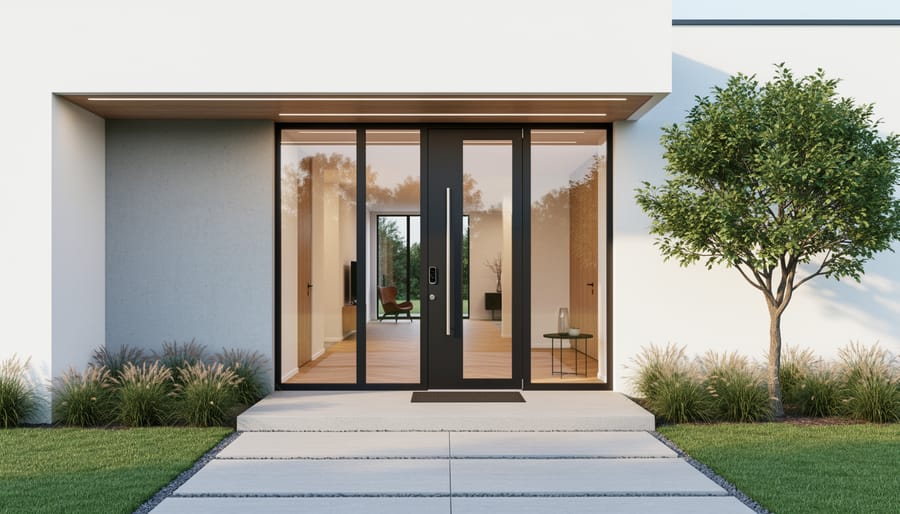
Crimsafe hinged security doors function as the primary defense layer for main entries while serving as a design statement. Single hinged doors suit standard entry widths up to 1200mm, maintaining clean proportions that complement contemporary facades. Double configurations accommodate wider openings common in luxury homes, creating symmetry that enhances architectural presence without overwhelming minimalist thresholds.
Hardware selection defines the visual impact. Stainless steel lever sets with concealed fixings preserve streamlined aesthetics, while powder-coated handles can match window frames or architectural metalwork for cohesive detailing. The hinge mechanisms use concealed tamper-resistant fixings, eliminating the industrial appearance that compromises design intent in high-end installations.
Profile depth matters for sightline integration. Low-profile frames measuring 32mm sit nearly flush with door jambs, creating an almost invisible barrier when viewed from inside, crucial for preserving views and natural light in open-plan living areas. This becomes particularly valuable at main entries where the security door interfaces with glazed surrounds or sidelights.
Contemporary installations increasingly favor neutral powder coat finishes like Monument or Surfmist that recede visually, allowing architectural features rather than security elements to dominate the entry sequence.
Sliding Security Doors and Screens
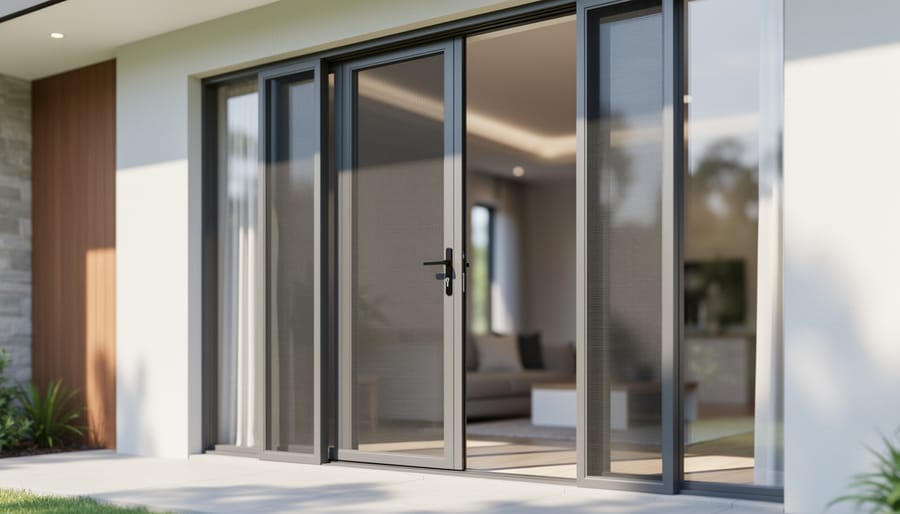
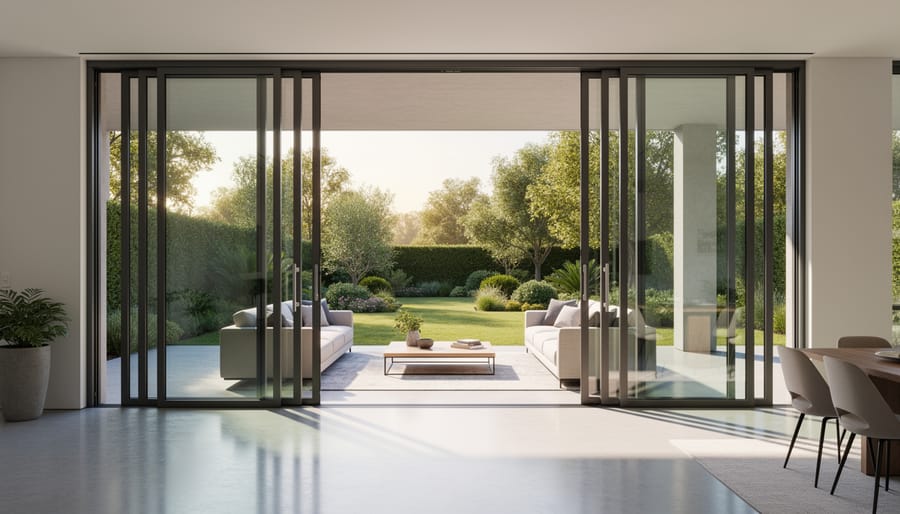
Sliding Crimsafe systems excel where modern architecture demands unobstructed transitions between interior and exterior spaces. The most substantial advantage lies in their ability to secure wide apertures, often spanning three to four meters, without the swing radius that hinged doors require. This makes them ideal for living areas opening onto terraces, pool decks, or courtyard gardens.
The engineering challenge centers on maintaining smooth operation while carrying the weight of heavy-duty mesh and robust frames. Premium sliding systems in 2026 incorporate stainless steel roller assemblies and precision-machined tracks that resist binding even after thousands of cycles. Coastal installations particularly benefit from marine-grade hardware that prevents salt corrosion from degrading performance.
For seamless indoor-outdoor living, consider recessed track configurations that eliminate the raised threshold common in standard sliding doors. This creates a flush transition that preserves visual continuity and accessibility. However, drainage becomes critical, ensure your installer specifies weep hole positioning to prevent water accumulation without compromising security.
Frame depth varies considerably across sliding products. Slimmer 50mm profiles suit minimalist architecture but require more frequent maintenance checks on rollers. Deeper 70mm frames accommodate heavier mesh tension and typically deliver superior long-term reliability in high-traffic applications.
Fixed Window Screens and Specialty Applications
Fixed window screens represent the most permanent and architecturally integrated form of Crimsafe protection, ideal for windows that rarely open or where unobstructed views take priority. Unlike operable systems, these screens attach directly to the window frame with the signature screw-clamp system, creating a seamless protective barrier that becomes part of the building envelope. For contemporary homes with floor-to-ceiling glazing, fixed screens preserve transparency while delivering knife-resistant protection, particularly valuable for ground-floor windows facing streets or public spaces.
Custom configurations shine in architecturally distinctive applications. Curved window walls, corner glass junctions, and triangular gable windows all accept bespoke Crimsafe fabrication, with frames powder-coated to match window profiles. Atriums and internal courtyards benefit from fixed screens that maintain visual continuity between interior and exterior zones while preventing forced entry through glazing. Skylight applications require specialized framing to support the mesh under wind load, protecting vulnerable overhead glass without blocking natural light.
The key specification consideration is cleaning access. Fixed screens need either removable panel sections or planning for external window cleaning equipment, as you cannot simply swing them open like hinged doors.
Recommendations: Matching Crimsafe Solutions to Modern Home Designs
For Minimalist and Contemporary Architecture
Minimalist architecture demands security solutions that honor its fundamental principles of restraint, precision, and spatial clarity. For a minimalist home select Crimsafe screens with the narrowest available frame profiles, typically 32mm or slimmer where structural integrity permits. These slender sections preserve the clean geometry that defines contemporary design without introducing visual noise.
Powder-coated finishes in matte black, charcoal, or custom-matched architectural whites integrate seamlessly with modern palettes. Request factory color-matching to your window frames or facade cladding for a cohesive appearance. The mesh itself becomes nearly invisible when viewed from interior living spaces, maintaining unobstructed sightlines to gardens, pools, or urban vistas, a critical consideration in projects approaching AD100 home design standards.
For floor-to-ceiling glazing systems, specify recessed track installations that conceal operating mechanisms within the threshold or head detail. This eliminates protruding hardware that disrupts horizontal datum lines. Sliding configurations work exceptionally well in minimalist contexts, providing security without the visual interruption of hinged doors. Collaborate with your architect and Crimsafe installer early in documentation to coordinate reveal depths and mounting details that preserve the intended material expression.
For Coastal and Resort-Style Homes
Oceanfront properties demand Crimsafe specifications engineered specifically for marine environments, where salt-laden air accelerates corrosion on standard materials. For coastal and resort-style homes, prioritize marine-grade stainless steel mesh with enhanced corrosion resistance, typically 316-grade stainless, and powder-coated aluminum frames in marine-specific finishes that withstand sea spray without degrading. These installations preserve the open, breezy aesthetic central to coastal home inspiration while delivering uncompromising protection. Maximum airflow configurations become essential in these contexts: specify sliding and bi-fold systems that open wide to capture ocean breezes, maintaining the indoor-outdoor fluidity that defines contemporary coastal living. Request slimline profiles in white or off-white powder coat to blend with typical coastal palettes, ensuring the security infrastructure doesn’t interrupt sightlines to water views. For properties within 500 meters of the ocean, confirm that all hardware, hinges, locks, and fasteners, carries marine-grade certification, as standard components will show rust staining within months. The investment in proper coastal specification prevents both aesthetic deterioration and structural compromise, protecting your architectural vision and security investment for decades in harsh saline conditions.
For Heritage and Transitional Renovations
Heritage and transitional renovations present a unique challenge: introducing modern security without compromising the property’s architectural integrity. Crimsafe addresses this through extensive customization options that respect period character while delivering contemporary protection.
Powder-coated frames in heritage colors, charcoal, deep bronze, or custom-matched historic hues, integrate seamlessly with existing window frames and door surrounds. Unlike generic black mesh that creates harsh visual contrasts, these finishes blend discreetly with traditional facades. For Victorian, Edwardian, or Federation homes undergoing sensitive updates, specify frames with traditional profiles that mirror original joinery rather than modern minimalist designs.
Transitional projects benefit from Crimsafe’s adaptability across varying architectural languages within a single property. When a contemporary rear extension meets a period frontage, consistent mesh specification maintains visual coherence while frame finishes can shift between zones, heritage tones facing the street, sleek graphite in modern additions.
Work with installers experienced in heritage properties who understand the importance of preserving sightlines, respecting symmetry, and protecting original materials during installation. Request samples mounted against your specific architecture before committing to full installation, ensuring the security enhancement elevates rather than diminishes the home’s character.
Common Mistakes to Avoid When Specifying Crimsafe
Even specification professionals with decades of experience make predictable errors when specifying Crimsafe systems for contemporary residential projects. Understanding these pitfalls before they occur saves significant time, expense, and design compromises during the installation phase.
The most consequential mistake is treating Crimsafe as a generic security product rather than a precision-engineered system requiring professional specification. Homeowners frequently attempt DIY measurements or rely on general contractors unfamiliar with the product’s structural requirements, leading to ill-fitting installations that compromise both security and aesthetics. The screw-clamp system demands exact frame tolerances that only certified installers can guarantee. Cutting corners on professional measurement and installation invalidates warranties and often necessitates complete reinstallation at double the original cost.
Product selection errors stem from prioritizing budget over architectural context. Designers sometimes specify standard black mesh for minimalist white interiors where custom powder-coated frames would preserve the intended palette, or select basic profiles for heritage properties where the slimline options would better respect period proportions. The incremental cost difference between standard and architecturally appropriate specifications rarely exceeds fifteen percent of the total project value, yet the visual impact differs dramatically. Always specify products within the architectural narrative rather than defaulting to catalog standards.
Overlooking future maintenance access creates long-term frustration in otherwise exemplary installations. Fixed screens on upper-level windows without considering exterior cleaning access, or sliding door configurations that block access to HVAC equipment, become permanent inconveniences. Before finalizing specifications, map maintenance pathways for window cleaning, gutter access, and mechanical system servicing to ensure Crimsafe installations enhance rather than complicate property upkeep.
- Measuring openings without accounting for reveal depths and existing frame protrusions, always engage certified installers for site verification
- Selecting finishes based solely on samples rather than viewing installed examples in similar lighting conditions
- Failing to coordinate electrical rough-in for magnetic locks or access control integration before frame installation
- Underestimating lead times for custom colors or configurations, creating construction schedule conflicts
- Neglecting to specify keying schedules that integrate with existing property master key systems
- Assuming all Crimsafe dealers maintain equivalent product knowledge and installation standards, verify certifications and view completed projects
Budget miscalculations typically underestimate the total installed cost by twenty to thirty percent. Published pricing reflects product-only costs, excluding professional installation, structural reinforcement where openings exceed standard spans, electrical integration, and finishing trades coordination. Request complete turnkey quotations that include all associated trades, permits, and project management rather than attempting to assemble separate bids. This approach reveals the true investment and prevents mid-project budget crises that force specification compromises.
Timing errors compound other mistakes. Specifying Crimsafe late in the construction schedule, after window and door frames are finalized, often requires retrofit solutions that compromise the clean integration achievable with early coordination. Introduce Crimsafe specifications during schematic design when frame reveals, structural supports, and finish coordination can be properly engineered rather than adapted.
Installation, Maintenance, and Long-Term Value
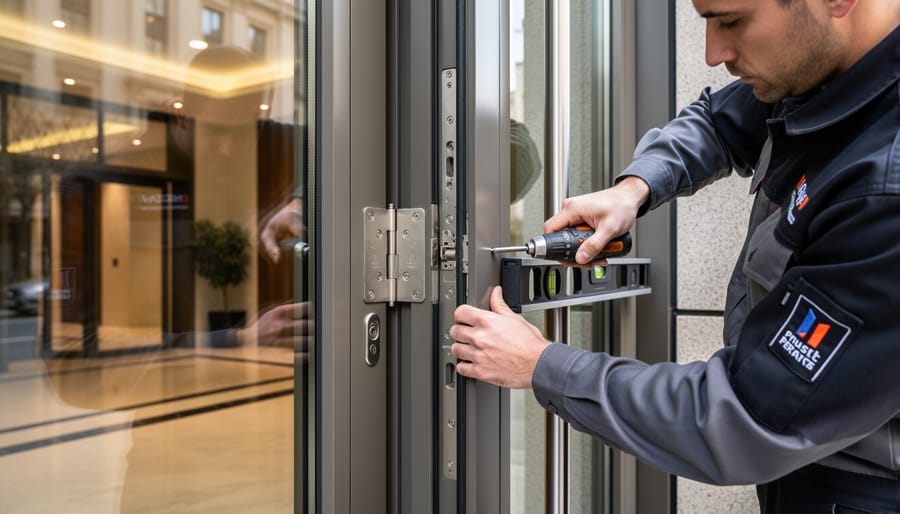
Professional installation of Crimsafe systems requires certified technicians who understand both the structural engineering principles and the precision demanded by contemporary architecture. Expect the installation process to take one to three days depending on the scope, with technicians conducting detailed measurements, substrate assessments, and architectural reviews before any cutting or drilling begins. Quality installers will protect flooring, coordinate with other trades, and ensure installations align perfectly with sightlines and architectural details, this meticulous approach justifies the professional fees and helps you avoid quick fixes that compromise both security and design integrity.
During installation, installers anchor the unique screw-clamp system directly into structural framing at specified intervals, creating a connection far stronger than conventional screen attachments. This process may require minor trim adjustments or frame reinforcements in older homes, which reputable installers will identify during initial assessment. For new construction or major renovations, coordinate Crimsafe specifications with architects early to integrate backing supports and ensure flush detailing.
Maintenance requirements remain minimal but non-negotiable for longevity. Monthly rinsing with fresh water removes salt, dust, and environmental contaminants that can compromise marine-grade finishes over time. Quarterly inspections of hinges, locks, and tensioning ensure smooth operation and immediate identification of any issues. Coastal property owners should increase washing frequency to weekly, particularly after storms. The tensioned mesh requires no adjustment under normal conditions, though annual professional inspections verify structural integrity and warranty compliance.
Long-term value calculation extends beyond the initial investment. Insurance premium reductions of 15-30% are common with certified security installations, creating annual savings that accumulate significantly over a decade. Property valuations in security-conscious markets show 3-8% premiums for homes with integrated protection systems that don’t compromise architectural aesthetics. Factor in the 10-year manufacturer warranty on mesh and frames, plus the extended lifespan, often 20-25 years in residential applications, and the cost-per-year becomes remarkably competitive compared to replacement-cycle products. Most importantly, the design value of maintaining unobstructed views while achieving security certifications cannot be quantified in purely financial terms for discerning homeowners.
Frequently Asked Questions
Does Crimsafe come with a warranty, and what does it cover?
Crimsafe products typically include a 10-year manufacturer’s warranty covering structural integrity, mesh performance, and corrosion resistance when professionally installed. The warranty protects against manufacturing defects and premature degradation but excludes damage from improper installation, extreme impact events, or unauthorized modifications.
Can pets or children damage Crimsafe mesh?
The woven stainless steel mesh withstands everyday contact from pets and children without damage. Unlike conventional insect screens, the tensile strength prevents tearing from scratching, and the screw-clamp retention system prevents the mesh from popping out under pressure.
How much does Crimsafe affect visibility and natural light?
The fine aperture mesh reduces visibility by approximately 15-20% compared to clear glass, similar to quality insect screening. Most homeowners adapt within days, and the minimal visual interruption preserves architectural sightlines far better than bars or heavy grilles while maintaining airflow.
Can Crimsafe integrate with smart home automation systems?
Hinged and sliding Crimsafe doors accept standard commercial-grade smart locks, motorized operators, and sensor systems. Custom integration requires compatible hardware selection during specification, and some complex automation may need specialist installers familiar with both security screening and home automation protocols.
What maintenance does Crimsafe require?
Maintenance consists primarily of periodic cleaning with mild detergent and water to remove dust and salt buildup in coastal areas. Annual inspection of hinges, locks, and the mesh perimeter ensures continued performance, and coastal properties benefit from quarterly rinsing to prevent corrosion.
Can Crimsafe be retrofitted to existing homes?
Yes, Crimsafe adapts to most existing door and window frames through custom measurement and fabrication. Retrofits work particularly well in heritage renovations where security upgrades must respect original architectural details, though some openings may need minor frame modifications.
How does powder coating affect long-term durability?
Quality powder-coated finishes provide superior UV and weather resistance compared to paint, maintaining color integrity for 10-15 years in most climates. Marine-grade powder coating for coastal installations includes additional corrosion inhibitors that extend the finish life in salt-air environments.
These questions reflect the sophisticated concerns of homeowners investing in premium security solutions where aesthetic integration and long-term performance matter as much as immediate protection. Understanding warranty coverage helps budget for lifecycle costs, while clarity on smart home compatibility ensures the security system aligns with contemporary living expectations rather than working against them.
Choosing Crimsafe for your modern home represents a fundamental shift in how security integrates with architectural design. In 2026, affluent homeowners and design professionals no longer accept the false choice between protection and aesthetic integrity. Crimsafe delivers both, transforming security from an afterthought into a sophisticated design layer that enhances rather than compromises your architectural vision.
The systems we’ve explored throughout this guide prove that engineered mesh technology, when properly specified and installed, disappears into contemporary facades while providing certified forced-entry resistance. Whether you’re designing a minimalist coastal villa or renovating a heritage property with modern sensibilities, Crimsafe offers configurations that respect your design language while addressing genuine security concerns.
Success depends on three critical factors: understanding which product type suits your specific architectural context, selecting finishes and profiles that align with your aesthetic direction, and engaging certified installers who approach the work with design awareness. Shortcuts in any of these areas undermine both performance and visual outcome.
Security should inform your architectural decisions from the earliest design phases, not constrain them afterward. When you integrate Crimsafe thoughtfully into your project, you create homes that embody both the openness that defines contemporary living and the protection that preserves it. That synthesis, achieved through informed product selection and expert installation, defines truly modern residential architecture.