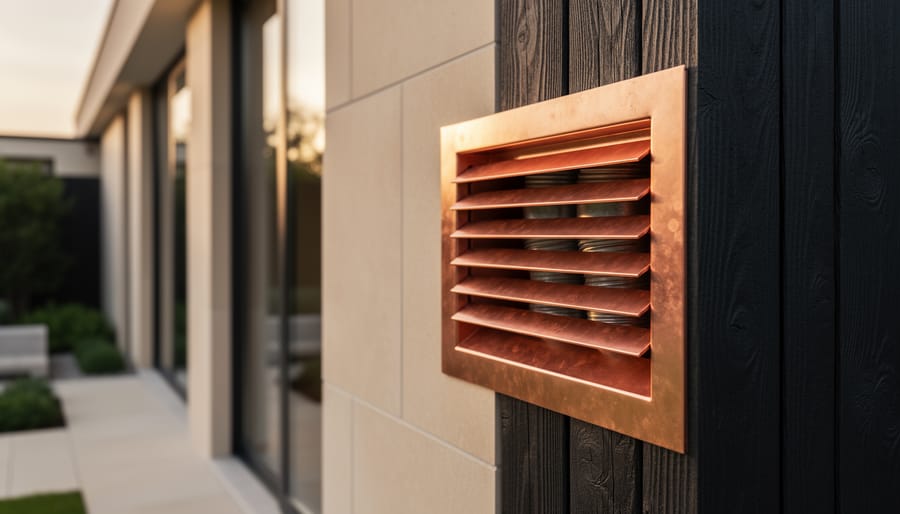
Position dryer vent terminations as sculptural architectural elements rather than afterthoughts by specifying museum-quality grilles in bronze, blackened steel, or custom-patinated copper that complement facade materials. Integrate vent pathways during schematic design phases, routing them through chase walls or structural voids to minimize exterior penetrations and preserve elevation integrity. Specify rigid metal ductwork over flexible alternatives, maintaining straight runs with minimal bends to optimize airflow efficiency while reducing lint accumulation that compromises both performance and fire safety.
The architectural dryer vent represents a paradox in residential design: simultaneously essential and overlooked, utilitarian yet capable of undermining meticulously crafted facades when poorly executed. In distinguished homes across five continents, from coastal villas in Comporta to modernist estates in California’s wine country, this modest building component demands the same design rigor applied to window fenestration or material transitions. The consequences of negligence extend beyond aesthetic compromise—inadequate ventilation systems contribute to approximately fifteen thousand residential fires annually, while improper installations degrade energy performance and shorten appliance longevity.
Contemporary architectural practice increasingly recognizes dryer vent design as an opportunity for integration rather than concealment. Leading firms collaborate with mechanical engineers during early design development, coordinating vent locations with structural grids and exterior composition. This strategic approach yields solutions where functional requirements enhance rather than compromise architectural vision. The most successful installations balance three imperatives: code compliance ensuring safe operation, maintenance accessibility preserving long-term performance, and design excellence honoring the building’s aesthetic language. Understanding this intersection empowers design professionals and discerning homeowners to elevate every building component, transforming necessary infrastructure into considered architectural expression.
When Infrastructure Meets Intention: Rethinking the Dryer Vent in Contemporary Design
The Modernist Dilemma: Clean Lines Meet Mechanical Reality
The pursuit of minimalist architectural aesthetics inevitably collides with the pragmatic demands of building systems, and nowhere is this tension more apparent than in the treatment of dryer vent terminations. For architects committed to facade purity, these necessary extrusions present a fundamental design challenge: how to reconcile the sculptural integrity of exterior walls with the mechanical realities of modern living.
Ludwig Mies van der Rohe famously declared that God resides in the details, yet even his glass-and-steel masterworks required ventilation solutions that threatened to compromise their ethereal transparency. Contemporary architects continue wrestling with this paradox. Tadao Ando’s concrete compositions in Japan often conceal mechanical terminations within shadow gaps and recessed planes, transforming functional necessity into subtle architectural gesture. The vents become invisible not through elimination but through strategic positioning within the rhythmic language of his facades.
In Scandinavia, architects like Bjarke Ingels approach the dilemma differently, occasionally celebrating mechanical elements as honest expressions of building function. His projects demonstrate how custom-fabricated terminations in brushed stainless steel or powder-coated aluminum can achieve visual harmony with contemporary materials palettes.
The solution lies not in camouflage alone but in intentional integration. Successful examples align vent locations with structural grids, conceal them within architectural reveals, or incorporate them into screened mechanical zones that maintain facade composition while preserving essential airflow performance.
Material Honesty and the Humble Vent Hood
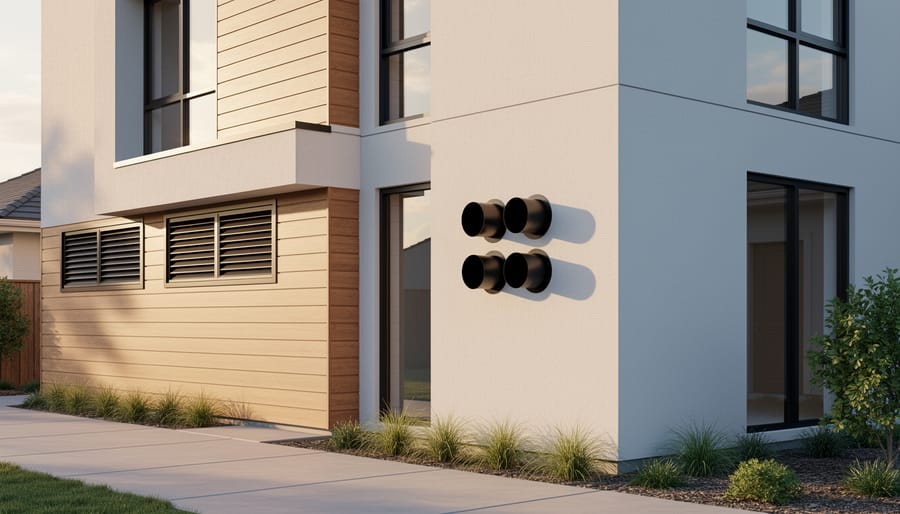
The termination point of a dryer vent presents an opportunity for material poetry rather than mere function. Thoughtful specification transforms this humble element into an expression of architectural intention, where weathered copper develops its characteristic verdigris patina over decades, creating visual continuity with traditional roof elements and guttering systems. This living finish evolves alongside the building itself, quietly announcing a commitment to materials that age with dignity.
Powder-coated steel offers a different proposition: the ability to recede entirely into the architectural composition. When color-matched to cladding systems, whether that be charcoal-grey fiber cement or warm terracotta stucco, the vent hood becomes nearly invisible, preserving the integrity of facade rhythms and proportional relationships. Contemporary European projects demonstrate this approach with particular finesse, selecting RAL color specifications that align precisely with primary building materials.
Stainless steel provides enduring brilliance in coastal environments where salt air demands resistance, its reflective quality suggesting industrial honesty rather than concealment. In minimalist compositions, this choice celebrates mechanical systems as part of the architectural narrative. Conversely, cast bronze terminations, though less common, offer heft and permanence appropriate to historically-informed renovations where contemporary interventions must respect established material hierarchies.
The selection extends beyond aesthetics to practical considerations: powder-coated finishes require periodic inspection for chips that invite corrosion, while copper and bronze develop protective oxidation layers that enhance longevity. Material honesty, in this context, means selecting finishes that perform as beautifully as they endure.
Strategic Placement: The Architect’s Consideration
Exterior Elevation and the Art of Concealment
The facade of a distinguished residence tells a story of intentionality, where every element contributes to an orchestrated visual narrative. Within this composition, the dryer vent termination presents both challenge and opportunity—a necessary functional element that demands thoughtful resolution rather than afterthought placement.
The art of concealment begins with strategic positioning during the design phase. Experienced architects embed vent terminations within architectural reveals—those shadowed recesses between materials or at building transitions where the eye naturally accepts depth and complexity. A charcoal-finished vent positioned within a limestone reveal becomes nearly imperceptible, reading as texture rather than aperture. Similarly, placement beneath eave overhangs or within decorative frieze bands allows the termination to recede into the architectural language of the elevation.
Landscape architecture offers another sophisticated concealment strategy. Precisely positioned ornamental grasses, sculptural shrubs, or espalier plantings can screen terminations while maintaining proper clearances for airflow and maintenance access. This living veil transforms a utilitarian necessity into an integrated landscape moment, though it requires ongoing horticultural stewardship to prevent overgrowth.
Yet concealment need not be the only answer. Progressive designers increasingly treat vent terminations as deliberate accents—commissioning custom bronze grilles that echo window muntin patterns, or specifying architectural-grade stainless components that complement contemporary material palettes. In Japanese-influenced design, these elements become opportunities for subtle ornamentation, transforming exhaust points into considered punctuations within the facade’s rhythm. The distinction between invisibility and celebration becomes a philosophical design choice, reflecting the residence’s broader architectural ethos.
Interior Spatial Planning and Ductwork Efficiency
The spatial choreography of a residence profoundly influences the performance of its mechanical systems, and nowhere is this relationship more apparent than in the configuration of dryer ventilation. When laundry facilities occupy thoughtfully positioned spaces within a home’s floor plan, the resulting duct runs become exercises in engineering elegance—short, direct pathways that maximize airflow while minimizing maintenance demands.
Consider the contemporary trend of concealing laundry facilities within primary bedroom suites or adjacent dressing chambers. While this arrangement offers undeniable convenience, it frequently necessitates circuitous duct routing through multiple floors or spanning considerable horizontal distances to reach exterior terminations. Each additional meter of ductwork and every ninety-degree turn diminishes system efficiency by approximately fifteen to twenty percent, transforming what should be a straightforward exhaust process into a compromised performance.
The most sophisticated residential designs position laundry spaces along exterior walls, ideally on ground floors where gravity assists condensate drainage and exterior access remains uncomplicated. This strategic placement allows for duct runs rarely exceeding three meters, with minimal bending requirements. In multi-story residences, vertical stacks enclosed within dedicated chase walls provide elegant solutions, ascending from lower-level laundry rooms to roof terminations while maintaining architectural discretion.
European villa conversions and Asian courtyard homes demonstrate exceptional spatial planning in this regard, integrating service areas into peripheral zones where mechanical systems benefit from proximity to building envelopes. These arrangements acknowledge that true luxury resides not merely in superficial aesthetics but in the invisible harmonies between form and function—where every building system operates at optimal efficiency, requiring minimal intervention while delivering maximum performance throughout the home’s lifespan.
The Performance Imperative: Why Design Must Serve Function
The Hidden Cost of Aesthetic Compromise
When aesthetic ambitions eclipse engineering fundamentals, the consequences manifest in ways that compromise both the poetry and performance of residential architecture. Consider the stately Georgian revival where vent routing navigates three stories through concealed chases, accumulating seventeen linear meters and nine angular transitions before exhaust reaches atmosphere. The homeowner savors uninterrupted exterior symmetry while unknowingly subsidizing this visual purity with doubled drying cycles and accumulating lint deposits that transform ductwork into combustible repositories.
Extended duct runs impose exponential resistance on airflow systems designed for directness. Each additional meter of travel, each 90-degree elbow installed to preserve a ceiling line or maintain facade continuity, compounds static pressure losses that reduce exhaust velocity below safe operational thresholds. In distinguished properties across the Cotswolds and Connecticut’s Gold Coast, concealed venting solutions frequently incorporate runs exceeding code-maximum recommendations, their elegant invisibility purchased at the cost of diminished appliance longevity and elevated fire risk.
Undersized terminations present another aesthetic compromise with tangible ramifications. The discreet louvered grille that harmonizes beautifully with limestone cladding may restrict airflow by forty percent compared to standard specifications, creating back-pressure that forces moisture-laden air to condense within wall cavities. This atmospheric moisture, unable to escape as intended, initiates the gradual degradation of structural elements, transforming what appeared as refined minimalism into a catalyst for concealed deterioration. The true cost of these compromises becomes evident not in quarterly utility statements but in premature equipment failure and remediation expenses that eclipse the original installation investment.
Fire Safety as a Design Principle
The National Fire Protection Association documents approximately 15,000 dryer-related fires annually in North America, with accumulated lint and inadequate ventilation systems accounting for the overwhelming majority. Within the realm of luxury homes, these statistics take on particular significance, as expansive floor plans often necessitate extended vent runs that compound risk when improperly designed.
A 2019 case study of a Hamptons estate fire traced the ignition point to a circuitous dryer vent system that had been retrofitted through ornamental millwork, creating numerous lint-accumulating angles. The subsequent restoration cost exceeded $2 million, underscoring how design oversights transform functional elements into liabilities.
Conversely, thoughtful initial design dramatically mitigates these hazards. Consider the approach employed in contemporary Scandinavian residences, where architects position laundry facilities along exterior walls, enabling direct, linear venting that minimizes fire risk while simplifying maintenance protocols. This strategy eliminates complex horizontal runs and unnecessary transitions, reducing lint accumulation points by approximately seventy percent.
In high-end residential architecture, integrating fire safety as a foundational design principle rather than an afterthought preserves both aesthetic integrity and occupant safety, while substantially diminishing the perpetual maintenance burden that compromises less deliberate installations.
Specifying Excellence: Materials and Systems That Endure
Beyond Code Minimum: Premium Ductwork Solutions
In the realm of architectural infrastructure, the elevation beyond code compliance represents a fundamental distinction between adequate function and exemplary performance. The specification of premium ductwork materials transforms the prosaic dryer exhaust system into a paragon of engineering efficiency—a decision that resonates throughout the life of a residence.
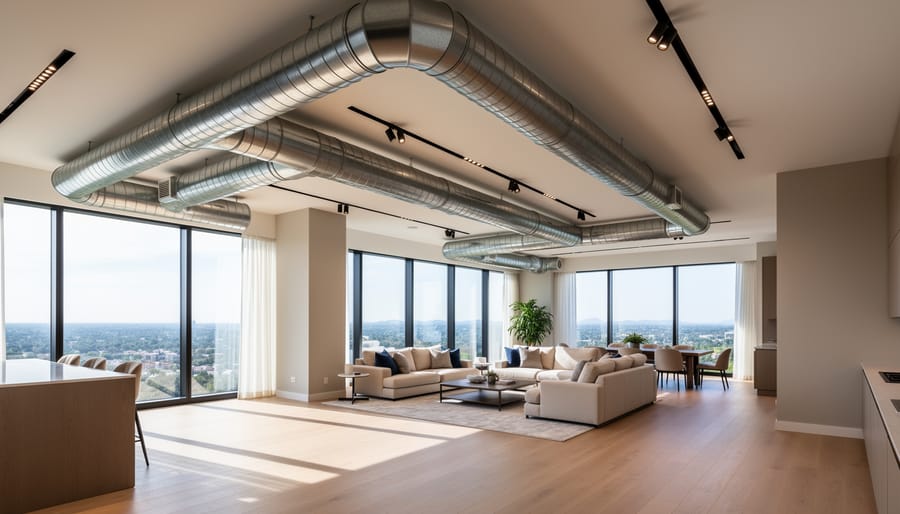
Smooth-walled stainless steel ducting stands as the pinnacle of this evolution, offering a surface so refined that lint particles find minimal purchase during their passage. This hyper-efficient interior landscape reduces friction dramatically, allowing heated air to traverse distances that would compromise lesser materials. The inherent corrosion resistance ensures decades of uncompromised performance, particularly vital in coastal environments where salt-laden air accelerates degradation. When paired with professional dryer vent cleaning services, these systems maintain near-pristine operational parameters.
Commercial-grade aluminum presents an equally compelling alternative, combining lightweight construction with substantial durability. Its rigid wall composition eliminates the accordion-pleated vulnerability of flexible ducting, creating an unobstructed pathway that preserves airflow velocity. This seamless geometry proves particularly advantageous in complex architectural configurations, where routing demands may require extended runs through mechanical chases or between structural members.
The performance differential proves quantifiable: premium materials can improve airflow efficiency by thirty percent or more compared to code-minimum installations, translating directly into reduced drying cycles, lower energy consumption, and diminished fire risk—invisible refinements that exemplify thoughtful architectural stewardship.
Terminal Fixtures as Architectural Statements
The terminal fixture—where ventilation system meets exterior envelope—presents a compelling opportunity to transform functional necessity into deliberate architectural gesture. Contemporary high-performance vent hoods transcend their utilitarian origins, offering weather protection through precision-engineered louvers and dampers while contributing meaningfully to façade composition. Marine-grade stainless steel fixtures with architectural finishes complement modernist vocabularies, while hand-forged bronze or copper terminations enhance traditional and transitional residences with patina that evolves gracefully across seasons.
Distinguished manufacturers now offer collections specifically calibrated for architectural specification, featuring concealed fastening systems, refined proportions, and finishes that coordinate with established architectural palettes. Wall-mounted terminations range from minimalist recessed designs that virtually disappear within cladding systems to proud sculptural elements that punctuate elevations with intentional geometry. Rooftop terminations deserve equal consideration, particularly on homes where multiple vantage points reveal roof planes as essential design surfaces.
Custom fabrication unlocks extraordinary possibilities for distinctive residences. Collaborations between architects and specialized metalworkers yield bespoke solutions that honor specific design narratives—perhaps echoing grillwork patterns from principal entries, reinterpreting traditional regional motifs, or extending contemporary material studies across all building systems. European ateliers have long understood this opportunity, treating ventilation terminations as considered elements within holistic architectural compositions.
The investment in refined terminal fixtures proves particularly prudent given their perpetual visibility and exposure to weathering forces. These permanent architectural features warrant the same material longevity and aesthetic consideration extended to lighting fixtures, hardware, and other visible building components that collectively establish design excellence.
Maintenance as Stewardship: Preserving Design Integrity
The Inspection Ritual: What Design-Conscious Homeowners Should Demand
Establishing a rigorous inspection protocol represents an essential investment in preserving both the performance and aesthetic integrity of architecturally integrated dryer vent systems. For residences of distinction, the inspection ritual should occur biannually at minimum, with quarterly examinations recommended for homes featuring particularly elaborate ductwork or multiple laundry installations. This cadence ensures that lint accumulation never reaches critical thresholds while allowing early detection of deterioration in custom materials or finishes.
When engaging service providers, homeowners must establish clear expectations regarding the treatment of architectural elements. The inspection specification should explicitly require documentation of all finishes surrounding vent terminations, photographic records of existing conditions, and protective protocols for adjacent surfaces. Technicians should employ low-impact access methods that respect materiality—soft brushes for delicate metals, protective sheeting for marble surrounds, and careful handling of custom grilles or registers.
A comprehensive examination encompasses the entire ventilation pathway: exterior terminations, concealed ductwork accessible through service panels, and interior connection points. Providers should utilize video inspection technology that allows homeowners to observe conditions within hidden runs without invasive exploration. The assessment must evaluate not only functional performance—airflow measurements, moisture detection, lint accumulation—but also the continued integrity of architectural treatments. Corrosion on bronze elements, discoloration of specialized coatings, or deterioration of weatherproofing details all warrant immediate attention.
Discerning homeowners should expect detailed written reports with actionable recommendations, distinguishing between routine maintenance and repairs requiring specialized craftspeople to preserve the original design intent and material authenticity.
Professional Cleaning Without Compromise
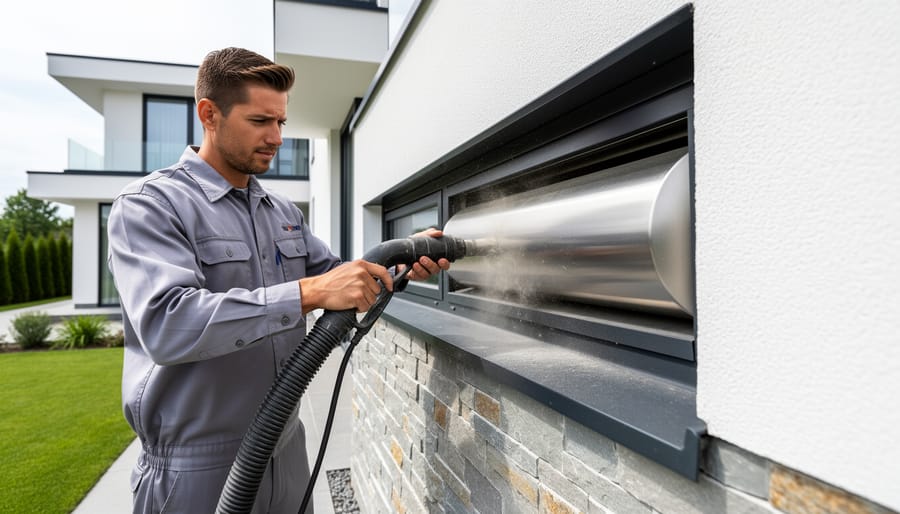
Maintaining the architectural integrity of dryer vent systems requires a measured approach that transcends conventional maintenance protocols. The discerning homeowner recognizes that annual professional cleaning represents not merely a safety imperative, but an opportunity to preserve the carefully considered design elements that distinguish exceptional residential architecture.
Engage specialists who understand that vent cleaning in architecturally significant homes demands precision instruments rather than aggressive techniques that might compromise custom finishes or delicate materials. Camera inspections reveal accumulation patterns without invasive procedures, while soft-bristle rotary systems navigate complex routing without abrading interior surfaces. For homes featuring concealed vent systems integrated within millwork or behind architectural panels, specify access points during initial construction that permit thorough cleaning while preserving aesthetic continuity.
The threshold between maintenance and replacement arrives when lint accumulation yields to structural degradation. Observe carefully for crimped sections in flexible ducting, separation at seam points in rigid installations, or corrosion where moisture has infiltrated the system. These conditions signal the need for intervention beyond routine cleaning.
When specifying replacement materials, resist the expedient choice of builder-grade aluminum flex ducting in favor of smooth-walled galvanized steel or stainless steel rigid systems. Though installation proves more demanding, these superior materials facilitate airflow efficiency while offering longevity measured in decades rather than years. For exterior terminations visible from street elevations or entertainment spaces, commission custom powder-coated assemblies that harmonize with the architectural color palette, transforming functional necessity into intentional design expression. The investment in appropriate materials honors both the home’s architectural vision and the practical demands of performance.
Case Studies: Elegant Solutions from Around the World
European Minimalism: The Invisible Infrastructure
In the northern latitudes of Europe, where design philosophy celebrates restraint and spatial clarity, the concealment of mechanical infrastructure reaches virtuosic heights. Scandinavian and German architects have transformed dryer vent integration into an exercise in spatial discipline, where every functional element disappears into the architectural composition.
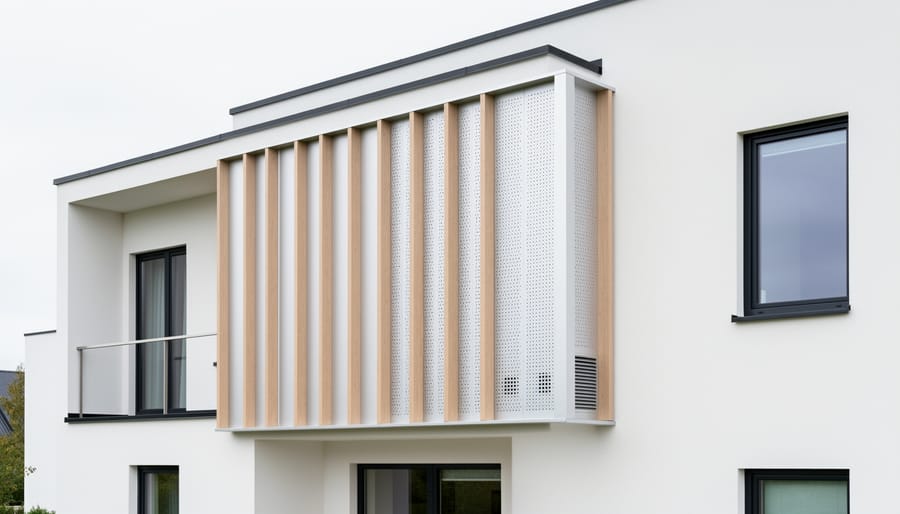
Copenhagen’s contemporary townhouses exemplify this approach, embedding exhaust systems within structural cores that double as vertical service chases. Perforated metal grilles, finished in powder-coated tones that precisely match interior palettes, create ventilation points indistinguishable from decorative architectural details. These installations demonstrate how technical requirements need not compromise visual purity when addressed during initial design conception rather than as afterthought.
German Passivhaus projects push this philosophy further, integrating dryer ventilation within sophisticated heat recovery systems. Exterior terminations vanish into recessed wall planes or beneath cantilevers, their presence revealed only through subtle shadow lines. The ducts themselves travel through thermally separated service layers, maintaining optimal airflow while preventing condensation—a common failure point in lesser installations.
This invisible infrastructure demands meticulous maintenance protocols. Homeowners engage specialized technicians who access concealed systems through discreet service panels integrated into millwork or wall surfaces. The aesthetic commitment extends to preservation: replacement components arrive pre-finished to exact specifications, ensuring repairs maintain the seamless visual continuity that defines European minimalism’s enduring appeal.
Japanese Precision: Intentional Exposure
In a fascinating counterpoint to Western concealment strategies, Japanese residential design occasionally embraces the visible expression of functional elements, transforming necessary systems into opportunities for aesthetic contemplation. This philosophy extends to ventilation infrastructure, where dryer vents and similar utilitarian components receive the same meticulous attention as celebrated architectural features.
Rather than viewing these elements as disruptions to visual harmony, certain Japanese architects integrate them through precision craftsmanship and honest material expression. Stainless steel terminals become sculptural termination points, their circular forms echoing traditional design’s appreciation for geometric purity. The vent housing might feature hand-brushed metal finishes that capture light throughout the day, creating subtle variations in appearance that align with principles of wabi-sabi and temporal awareness.
This intentional exposure demands exceptional execution. Every joint, seam, and fastener receives scrutiny during installation and maintenance. The exterior termination becomes a study in proportional relationships, positioned to complement window placement and facade rhythm. Maintenance protocols reflect this elevated status, with quarterly inspections ensuring not only functional performance but aesthetic integrity, preserving the crisp edges and unblemished surfaces that distinguish thoughtful design from mere visibility.
The convergence of architectural vision and mechanical necessity reveals itself most eloquently in elements we traditionally relegate to invisibility. Dryer vent design exemplifies this intersection, where the exhaust pathway becomes an opportunity rather than an obligation. Throughout residences from Copenhagen’s minimalist townhouses to Singapore’s vertical estates, discerning designers demonstrate that every building system contributes to the cohesive narrative of place.
This integration demands intentionality from conception through decades of habitation. Proper specification honors both the material language of a home’s envelope and the thermodynamic requirements of moisture evacuation. Installation executed with architectural sensitivity preserves sightlines and facade rhythms while ensuring optimal performance. Yet the relationship between design excellence and mechanical function extends beyond initial construction.
Ongoing maintenance through professional cleaning, inspection, and repair represents the stewardship required to preserve your aesthetic investment. A meticulously detailed stainless steel termination loses its sculptural presence beneath lint accumulation; concealed routing systems fail silently within walls when inspection protocols lapse. These interventions protect not merely efficiency and safety, but the design integrity that justified careful material selection and spatial planning.
View dryer vent design as fundamental to holistic home excellence rather than incidental infrastructure. This perspective transforms maintenance from routine expense into preservation practice, safeguarding the seamless marriage of form and function that distinguishes architecturally significant residences. The homes that endure as exemplars across generations attend equally to visible grandeur and hidden precision.