
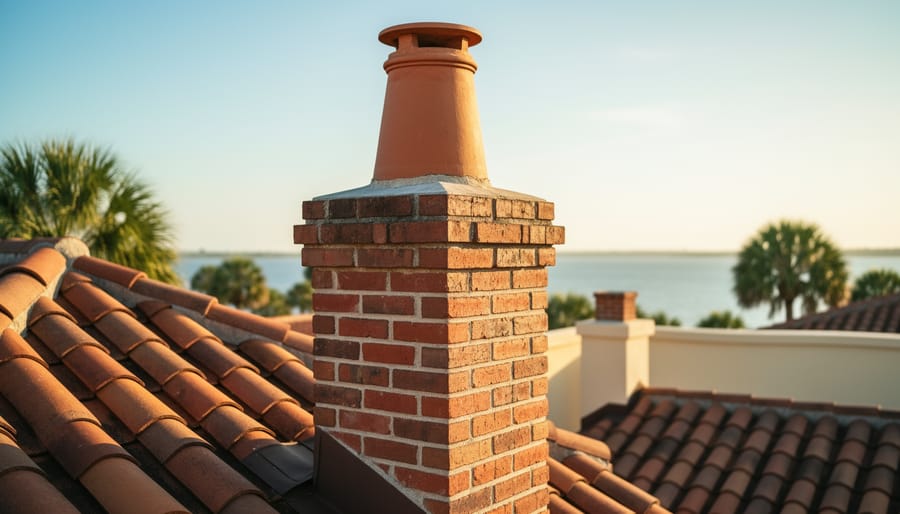
Engage Mason Chimney Repair specialists who understand the architectural nuances of Tampa Bay’s Mediterranean Revival, Spanish Colonial, and Victorian-era chimneys, where salt-laden Gulf air, tropical humidity, and thermal cycling create distinct deterioration patterns absent in northern climates. Document the chimney’s original construction through archival photographs, building permits, and historical society records before intervention begins, ensuring any restoration respects the authentic materials and craftsmanship that define these structures as cultural landmarks. Source period-appropriate red clay bricks, hand-mixed lime mortar, and terracotta chimney pots through architectural salvage networks and specialized suppliers who replicate historical building materials, as standard modern components compromise both aesthetic integrity and long-term structural compatibility with century-old masonry systems.
Tampa Bay’s historic residential architecture stands as testament to the region’s distinctive evolution from frontier outpost to sophisticated coastal community, with chimneys serving as prominent vertical elements that anchor rooflines and define neighborhood character. These towering structures endured Florida’s hurricane seasons, winter cold snaps, and relentless subtropical moisture for generations, yet today face accelerating deterioration from deferred maintenance, incompatible previous repairs, and environmental stresses intensified by climate change. The preservation of these architectural signatures demands more than standard masonry repair; it requires intimate knowledge of historical construction techniques, regional material science, and the delicate balance between structural necessity and heritage conservation. This specialized restoration work connects contemporary homeowners to Tampa Bay’s architectural legacy while protecting property values and neighborhood character for future generations, transforming functional necessity into cultural stewardship.
The Architectural Significance of Tampa Bay’s Historic Chimneys
Regional Construction Traditions and Materials
Tampa Bay’s historic chimneys embody a distinctive architectural narrative shaped by the region’s multicultural heritage and demanding subtropical environment. Unlike their northern counterparts, these structures required materials and construction methods specifically calibrated to withstand relentless humidity, seasonal storms, and the particular thermal expansion characteristics of Florida’s climate.
The region’s chimney builders favored locally sourced soft red brick, prized for its porosity and ability to accommodate moisture fluctuation without catastrophic spalling. These artisans also incorporated harder varieties imported from Cuba and the Carolinas, often creating striking polychromatic patterns that reflected Spanish Colonial and Mediterranean Revival sensibilities. The mortar compositions reveal remarkable ingenuity: traditional lime-based mixtures enhanced with crushed oyster shell and volcanic ash created breathable joints that permitted vapor transmission while maintaining structural integrity across generations.
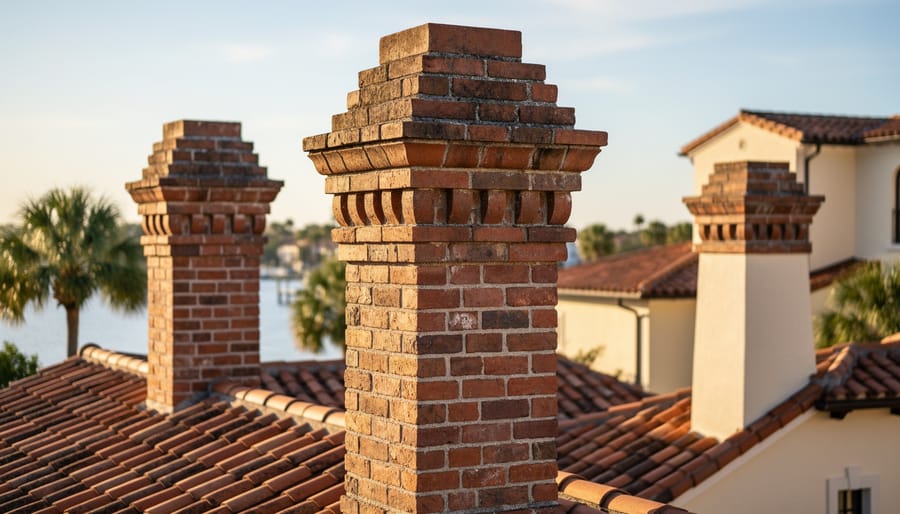
Architecturally, Tampa Bay chimneys display the elegant restraint of Spanish influence through corbelled caps and decorative tile accents, contrasted with the robust proportions characteristic of Southern plantation traditions. Cuban craftsmen introduced elaborate chimney pots and terra-cotta crowns that served both functional and aesthetic purposes, channeling smoke efficiently while expressing cultural identity through form.
Understanding these regional particularities proves essential for authentic restoration. Modern Portland cement mortars, while structurally sound in contemporary construction, create impermeable barriers that trap moisture within historic masonry, accelerating deterioration. Similarly, replacement bricks must match not only visual characteristics but also thermal and porosity properties to maintain the chimney’s historical performance and longevity within Tampa Bay’s distinctive climatic conditions.
Period-Specific Design Elements Worth Preserving
Tampa Bay’s architectural heritage reveals itself eloquently through chimney design, where each era left distinctive signatures worth preserving. Victorian-era chimneys, prevalent in Tampa’s Ybor City and Hyde Park neighborhoods, showcase elaborate corbelling patterns—stepped brickwork that creates decorative crowns resembling miniature castellations. These ornamental projections served both aesthetic and functional purposes, protecting masonry from water damage while signaling the homeowner’s refined taste.
Mediterranean Revival homes, flourishing during the 1920s land boom, feature smooth stucco-clad chimneys topped with terracotta caps displaying geometric patterns or hand-painted tiles. Their flue configurations often incorporated multiple openings to serve decorative fireplaces in various rooms, reflecting the period’s emphasis on indoor-outdoor living.
Craftsman bungalows present robust brick chimneys with contrasting mortar joints and simple stone caps, embodying honest craftsmanship. Colonial Revival residences display slender, symmetrical chimneys constructed from Flemish-bond brickwork, occasionally incorporating decorative panels or date stones.
Preservation specialists must document these elements meticulously—photographing corbel patterns, recording mortar composition, and cataloging original terra cotta work—ensuring restoration maintains historical authenticity while addressing structural integrity for generations to come.
Understanding Deterioration in Florida’s Coastal Climate
The Hidden Dangers of Deferred Maintenance
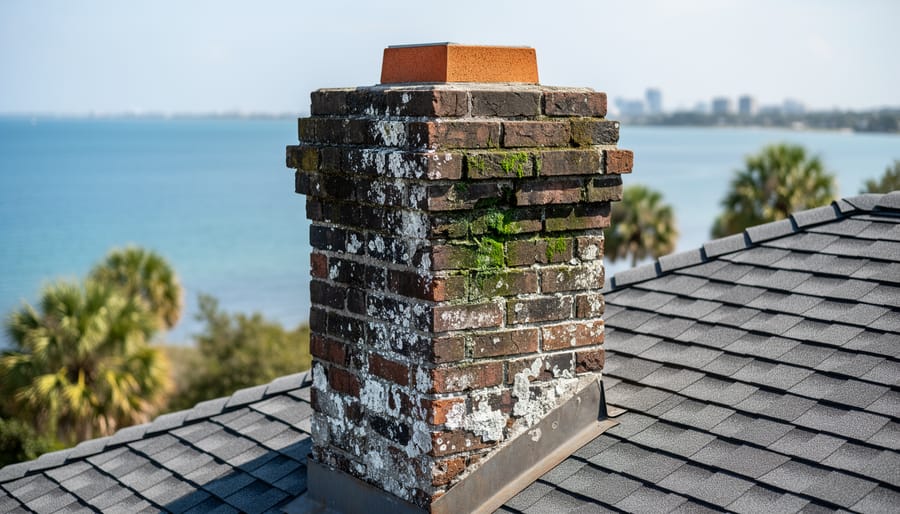
The delicate masonry of Tampa Bay’s historic chimneys deteriorates through an insidious progression that many homeowners fail to recognize until crisis arrives. What begins as hairline fractures in nineteenth-century mortar joints evolves into systematic water infiltration, particularly during the region’s intense subtropical storms. Moisture penetrates these compromised seams, gradually dissolving lime-based mortars formulated generations ago, weakening the structural bond between bricks that have stood for over a century.
This cascading deterioration creates genuine safety hazards that extend beyond aesthetic concerns. As mortar deteriorates and bricks shift, flue liners crack or separate, creating pathways for carbon monoxide to seep into living spaces rather than venting safely skyward. The colorless, odorless nature of this deadly gas makes such failures particularly treacherous in homes where residents assume their historic chimneys remain sound simply because the exterior facade appears intact.
The financial implications compound exponentially with each season of neglect. A modest repointing project addressing early mortar deterioration might represent a manageable investment, perhaps several thousand dollars. Delay this intervention, however, and the scope expands dramatically to include brick replacement, flue reconstruction, and potential interior remediation where water damage has compromised adjacent walls and ceilings. In severe cases, complete chimney rebuilding becomes necessary, transforming a preventative measure into a restoration emergency that can exceed thirty thousand dollars while threatening the architectural authenticity these distinguished properties deserve.
Authentic Restoration Versus Modern Replacement
Sourcing Period-Appropriate Materials
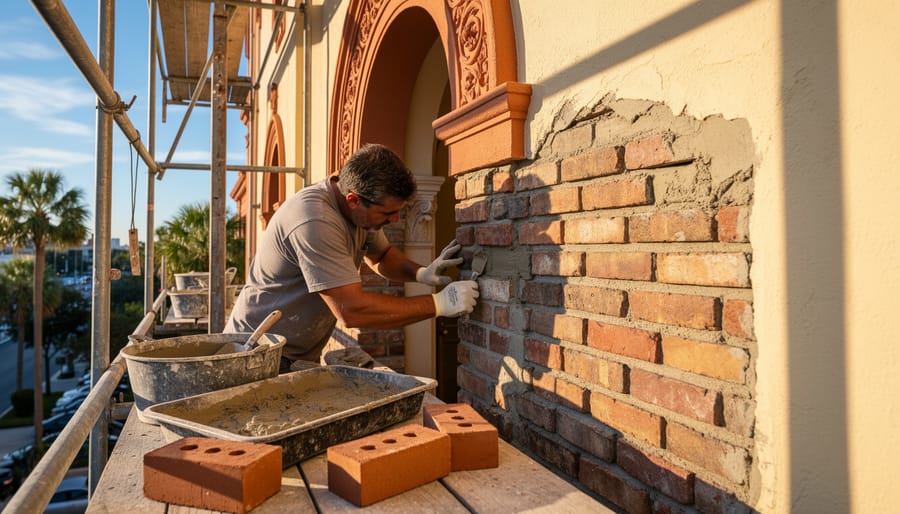
Authenticating a historic chimney restoration demands meticulous attention to material provenance. In Tampa Bay’s architectural landscape, where Mediterranean Revival and Victorian-era homes showcase distinctive masonry work, sourcing period-appropriate materials becomes both challenge and imperative. Reclaimed bricks from deconstructed structures of similar vintage offer ideal solutions, bearing the patina and dimensional characteristics that machine-made alternatives cannot replicate. Specialized suppliers throughout Florida maintain inventories of salvaged materials, though securing sufficient quantities often requires patience and persistence.
Mortar composition proves equally critical. Historic lime-based mortars differ fundamentally from modern Portland cement mixtures in both appearance and performance. Traditional formulations allow masonry to breathe and accommodate the subtle movements inherent in older structures, preventing the cracking that rigid contemporary mortars inevitably cause. Analysis of existing mortar through laboratory testing reveals precise aggregate ratios and mineral compositions, enabling craftsmen to recreate historically accurate mixes.
The pursuit of authentic finishes extends to decorative elements—corbelling, ornamental caps, and chimney pots that define a structure’s character. Artisan foundries and specialty manufacturers produce custom reproductions when original components prove beyond repair, ensuring the restored chimney honors the vision of its original architects while withstanding another century of Tampa Bay’s subtropical climate.
The Craftsman’s Touch: Specialized Skills Required
Restoring a historic chimney demands an artisan’s fluency in obsolete techniques that distinguish authentic classic home restoration from mere cosmetic repair. The craftsman must possess intimate knowledge of lime-based mortars, whose flexibility and breathability prove essential for the region’s thermal expansion cycles and moisture management. Unlike modern Portland cement, traditional lime mortar accommodates the subtle movements inherent in century-old masonry while permitting vapor transmission that prevents destructive salt crystallization.
Equally critical is understanding historical bricklaying patterns specific to Tampa Bay’s architectural heritage, from Flemish bond to American common bond variations. The skilled mason reads the original construction logic, deciphering how nineteenth-century builders approached structural load distribution and thermal performance without contemporary materials. This interpretive ability, combined with patient hand-tooling techniques for joint profiles and surface textures, separates preservation specialists from conventional contractors. Such expertise ensures each restored element honors both the chimney’s functional integrity and its role as architectural narrative.
The Restoration Process: What to Expect
Documentation and Historical Research
Authentic restoration begins with meticulous documentation and research, establishing a foundation that honors both architectural integrity and historical provenance. Before any physical work commences, preservation specialists conduct comprehensive archival investigations, examining building permits, insurance maps, and period photographs that reveal the chimney’s original configuration and materials. These documents often uncover significant details—brick bonding patterns, corbelling techniques, or decorative elements—that may have been obscured by subsequent modifications.
Photographic documentation captures existing conditions from multiple angles, recording not only visible deterioration but also subtle clues about construction methods and material sources. Structural assessments by engineers experienced in historic masonry identify hidden damage while distinguishing between original craftsmanship and later interventions. This investigative phase proves particularly valuable in Tampa Bay, where coastal exposure and humidity create unique deterioration patterns requiring specialized understanding. The research process connects contemporary homeowners with their property’s narrative, revealing stories of the craftsmen who built these chimneys and the families who gathered around their hearths, transforming restoration from mere repair into an act of cultural stewardship that preserves architectural heritage for future generations.
Phased Restoration for Occupied Homes
Restoring a historic chimney while family life continues requires thoughtful orchestration and meticulous planning. Distinguished restoration specialists in Tampa Bay have refined approaches that honor both the architectural integrity of these storied structures and the daily rhythms of contemporary domestic life.
The most effective strategy involves sequential staging, where craftsmen concentrate on one section while maintaining functionality elsewhere. This method typically begins with comprehensive diagnostic assessment, followed by exterior restoration that minimizes interior disturbance. Temporary weather protection systems shield living spaces from the elements during masonry work, while specialized containment barriers control dust migration—a particular concern when working with historic mortars and potential lead paint remnants.
Establishing realistic timelines proves essential for maintaining livability throughout the process. Quality restoration cannot be rushed; Tampa Bay’s humidity and temperature fluctuations require proper curing intervals between phases. Sophisticated homeowners appreciate contractors who communicate transparently about daily activities, potential disruptions, and milestone achievements.
Temporary heating alternatives become necessary when chimneys serve active fireplaces. Premium restoration firms coordinate these accommodations seamlessly, understanding that historic home dwellers value both authenticity and comfort. The investment in phased restoration ultimately protects both the architectural treasure and family well-being, ensuring these cherished chimneys continue their essential role in Tampa Bay’s residential heritage for generations forward.
Selecting the Right Restoration Partner in Tampa Bay
Distinguishing between preservation specialists and general contractors represents a pivotal decision in safeguarding your historic chimney’s architectural integrity. The restoration of period chimneys demands practitioners who possess not merely construction expertise, but a nuanced understanding of historical building methodologies, authentic materials sourcing, and Tampa Bay’s distinctive architectural heritage spanning Spanish Colonial Revival to Mediterranean Renaissance influences.
Begin your search by inquiring about specific experience with historic masonry systems. A qualified restoration partner should articulate familiarity with traditional lime mortars, handmade brick matching, and terra cotta tile restoration techniques particular to early-twentieth-century construction. Request portfolios documenting previous projects on properties of similar vintage and architectural pedigree. Examine whether their approach prioritizes reversible interventions and respects the Secretary of the Interior’s Standards for the Treatment of Historic Properties.
Credentials matter significantly in this specialized field. Seek professionals affiliated with preservation organizations such as the Association for Preservation Technology International or those holding certifications in historic masonry conservation. Inquire about their network of artisan craftspeople who understand traditional chimney construction, from flue liner specialists to ornamental cap fabricators working in period-appropriate materials.
Understanding local architectural context distinguishes exceptional practitioners from capable generalists. Your restoration partner should recognize how Tampa Bay’s humid subtropical climate historically influenced chimney design, including ventilation considerations and moisture management strategies embedded in original construction. They should appreciate the cultural significance of decorative chimney elements that reflect the region’s Mediterranean Revival legacy.
Essential questions include their approach to material sourcing, whether they conduct thorough structural assessments before proposing interventions, and how they balance modern safety requirements with historical authenticity. Request references from previous clients with historic properties, and verify their understanding of local preservation guidelines that may govern exterior alterations. The ideal partner views your chimney not as an isolated repair project but as an integral element within Tampa Bay’s architectural narrative.
Preserving Value and Legacy
Authentic chimney restoration represents far more than structural repair—it embodies a commitment to architectural stewardship that yields substantial returns across multiple dimensions. When executed with period-appropriate materials and techniques, restoration work delivers measurable enhanced property value that consistently outpaces conventional renovation investments. Historic properties with meticulously preserved original features command premium pricing in Tampa Bay’s competitive real estate market, attracting discerning buyers who recognize the irreplaceable character of genuine craftsmanship.
Beyond financial considerations, restored chimneys strengthen the visual cohesion of historic neighborhoods, contributing to the collective architectural narrative that defines Tampa Bay’s most distinguished communities. Each authentically preserved element maintains the cultural continuum connecting contemporary residents to the region’s Mediterranean Revival and Colonial heritage.
Property owners undertaking qualified restoration work may access federal and state historic preservation tax credits, offsetting substantial portions of project costs while ensuring compliance with preservation standards. These incentive programs recognize restoration’s broader societal value, encouraging private investment in cultural conservation.
Perhaps most profoundly, authentic restoration offers intangible rewards that transcend economics. Serving as custodian of architectural heritage connects homeowners to generations of previous occupants and future stewards alike. The knowledge that one’s efforts preserve irreplaceable craftsmanship—the handmade terracotta tiles, the carefully proportioned flues, the distinctive corbelling—for descendants who will appreciate their beauty and ingenuity provides deep satisfaction. This temporal perspective transforms restoration from mere property maintenance into an act of cultural preservation, securing Tampa Bay’s architectural legacy against the erosive forces of time and expedience.
A historic chimney represents far more than a conduit for smoke—it stands as a vertical monument to Tampa Bay’s architectural narrative, bearing witness to generations of craftsmanship and regional identity. The decision to restore rather than replace these structures transcends practical considerations, becoming an act of cultural stewardship that connects contemporary homeowners to the master masons and builders who shaped the region’s distinctive character.
The intersection of preservation responsibility and tangible benefit reveals itself through enhanced property values, improved structural integrity, and the irreplaceable authenticity that distinguishes truly significant homes from mere residences. When approached with appropriate reverence and expertise, chimney restoration becomes an investment that appreciates both financially and culturally, offering returns measured not only in market performance but in the perpetuation of architectural excellence.
Tampa Bay’s historic chimneys embody regional stories written in brick, limestone, and mortar—narratives of climate adaptation, material innovation, and aesthetic evolution unique to Florida’s Gulf Coast. Their preservation ensures these stories continue resonating through future generations, maintaining the visual and structural language that gives our neighborhoods their distinctive sense of place.
The homeowners who embrace this responsibility join a distinguished lineage of preservation-minded individuals who understand that stewardship of historic architecture extends beyond personal ownership. Your restored chimney stands as testament to the belief that some elements of our built environment merit protection, careful maintenance, and reverent restoration—not as burdensome obligations, but as privileges inherent in caring for structures worthy of enduring admiration.